Check Engine Light On in Alexandria: Will You Pass Inspection? (Safety vs. Emissions)
Can you pass Virginia inspection with the check engine light on? In Alexandria, it depends on which one. The State Police safety inspection has no rejection item for that light. The emissions test fails a car when an emissions fault has turned it on, and DMV won't renew your registration until the car passes or gets a waiver.
Most answers online are written for parts of Virginia with no emissions testing. Alexandria is in the program, so most cars here need a safety inspection every year and an emissions inspection every two years (DEQ, DMV). Different agencies, different rules, even when both happen in the same lane.
The safety inspection: what the State Police manual says about warning lights
The safety inspection follows the Virginia State Police Motor Vehicle Safety Inspection Manual approved March 17, 2026, which carries the 19VAC30-70 regulations. It has no item for the check engine light. The inspector doesn't plug into your diagnostic port. A few other dash lights are a different story. Here's what the manual says for cars and light trucks up to 10,000 lb:
| Dash light | What the manual says | Where |
|---|---|---|
| Check engine | No rejection item | Whole manual |
| Airbag (SRS) | The readiness light check is "advisory only and not cause for rejection." The inspector tells you about it. The car is rejected if an airbag deployed and wasn't replaced, airbag parts were removed, or defects are visible. | 19VAC30-70-290 E |
| Amber ABS | "DO NOT reject if only the amber ABS/anti-lock brake lamp is on." The exception is older integrated ABS systems: reject if the brake and anti-lock lights stay on longer than 60 seconds during that test. | 19VAC30-70-80 |
| Red brake warning | Must light when the key is turned to start and go off with the engine running and parking brake released. If it doesn't work properly, the car is rejected. | 19VAC30-70-80 |
| Brake pad wear | Not an automatic rejection. The inspector checks whether the pads are under 2/32 of an inch. | 19VAC30-70-80 |
Motorcycles and heavy vehicles are stricter: they're rejected if the airbag light won't come on or stays on (19VAC30-70-350 and -660). And an airbag light that passes is still worth a look, because it's flagging a fault in the system that protects you in a crash.
Where the problem behind the light can still fail you
Some causes of a check engine light are safety rejections in their own right. Under 19VAC30-70-310, a 1973 or newer car is rejected if emissions parts have been removed, disconnected or made inoperable: the catalytic converter, hoses, valves, the canister, the gas cap. Under 19VAC30-70-300, so is an exhaust leak anywhere in the system (both in the manual).
The emissions test: a lit light fails
For 1996 and newer gas cars, Virginia's emissions test is mostly a scan of the car's on-board diagnostics, not a tailpipe test (DEQ). The rule in 9VAC5-91-420 G.3 is short:
- Emissions-related failure codes that command the check engine light on fail the car. The word that matters is "commanded": the rule turns on whether the code commands the light on.
- A check engine light that doesn't work also fails. If the bulb never lights, the test catches it. Pulling the bulb won't get you through.
That rule also says a car can be "rejected from testing" instead. A rejection isn't a failure, and DEQ says you won't be charged the inspection fee for one (DEQ).
| Fail | Rejected from testing | |
|---|---|---|
| Common causes | Check engine light commanded on by an emissions code; light that doesn't work; visible smoke, with no waiver possible (DEQ) | Too many readiness monitors "not ready"; exhaust leak; visible smoke at the pre-test check; missing gas cap; the scanner can't reach or talk to the car's computer; OBD tampering |
| Fee | A paid test, capped at $30 by Va. Code § 46.2-1182 | No fee |
| Next step | Repair, then the free retest (below) | Fix the condition, then test |
One more rule from 9VAC5-91-420 B: before testing, the station has to tell you whether it can do the emissions repairs your car would need if it fails. You approve the test after hearing that.
Don't clear the code the week before your test
Clearing the code with a scanner, or disconnecting the battery, turns the light off. It also resets the car's readiness monitors, the self-tests the computer runs on the catalytic converter, oxygen sensors and other systems. EPA's 2001 guidance to inspection programs says that when the fault code memory is cleared, "all readiness codes will also be cleared and set to 'not ready,'" and it lists battery disconnection or replacement as a cause too (EPA420-R-01-015). Under 9VAC5-91-420 C.8, a 2001 or newer car with two or more monitors "not ready" is rejected from testing (three or more for 1996 to 2000 models).
You drive away with no result, and if the fault is real, the light comes back. Our post on readiness monitors that aren't ready covers how long they take to reset and Virginia's new not-ready waiver.
Flashing vs. steady: when to stop driving
A steady light and a flashing light are not the same warning.
- Steady: EPA's consumer brochure on OBD (2002, revised 2012) says there's "no cause for panic." Get it checked soon, and first make sure your gas cap isn't loose or missing (EPA).
- Flashing: the same brochure says a blinking light means a severe problem, "such as a catalyst-damaging misfire." EPA says to minimize time on the road and avoid high speed, towing and heavy loads. Honda's owner's manual for the 2024 Civic Sedan is stricter. If the light blinks, it says to "park the vehicle in a safe place with no flammable items" and let the engine cool for at least 10 minutes. If it blinks again after a restart, drive to a dealer at 31 mph or less (Honda). For a steady light, it says to avoid high speeds and get the car inspected right away.
Our advice at the counter: if it's flashing, don't start a run on the Beltway or I-95. Get somewhere safe, follow your own owner's manual, and have it looked at before adding miles. If it's steady, book a diagnosis soon, and don't plan on passing the emissions test until it's fixed.
If you fail: the free retest window
If your car fails its first emissions test, you get one free retest at the same station within 14 calendar days (DEQ, 9VAC5-91-420 L). Go somewhere else, or come back on day 15, and it's a new paid test.
Two things trip people up on the retest:
- The repair resets the monitors. If the car failed for a catalytic converter code and the catalyst monitor still shows "not ready" at the retest, the regulation says it's rejected (9VAC5-91-420 C.8). Plan the repair early in the 14 days so there's time to drive the car before you come back. Since July 1, 2026, state law also lets a car that failed and is still not ready at reinspection qualify for a waiver, if the waiver conditions are met (Va. Code § 46.2-1181 A). Our not-ready post has the details.
- Waivers only count certain repairs. If emissions repairs don't get the car to pass, DEQ can issue a waiver, but only repairs done or approved by a Certified Emissions Repair Technician at a Certified Emissions Repair Facility count toward it (DEQ). The not-ready post covers the waiver rules. We're a DEQ Certified Emissions Repair Facility, so qualifying emissions repairs done here can count toward a waiver.
A failed safety inspection works differently. You get a rejection sticker, and a reinspection at the same station within its 15-day window can cost no more than $1 (19VAC30-70-40 in the manual). If your sticker has already run out, see what to do when your inspection sticker has expired.
Getting it checked at S. Washington & Wilkes
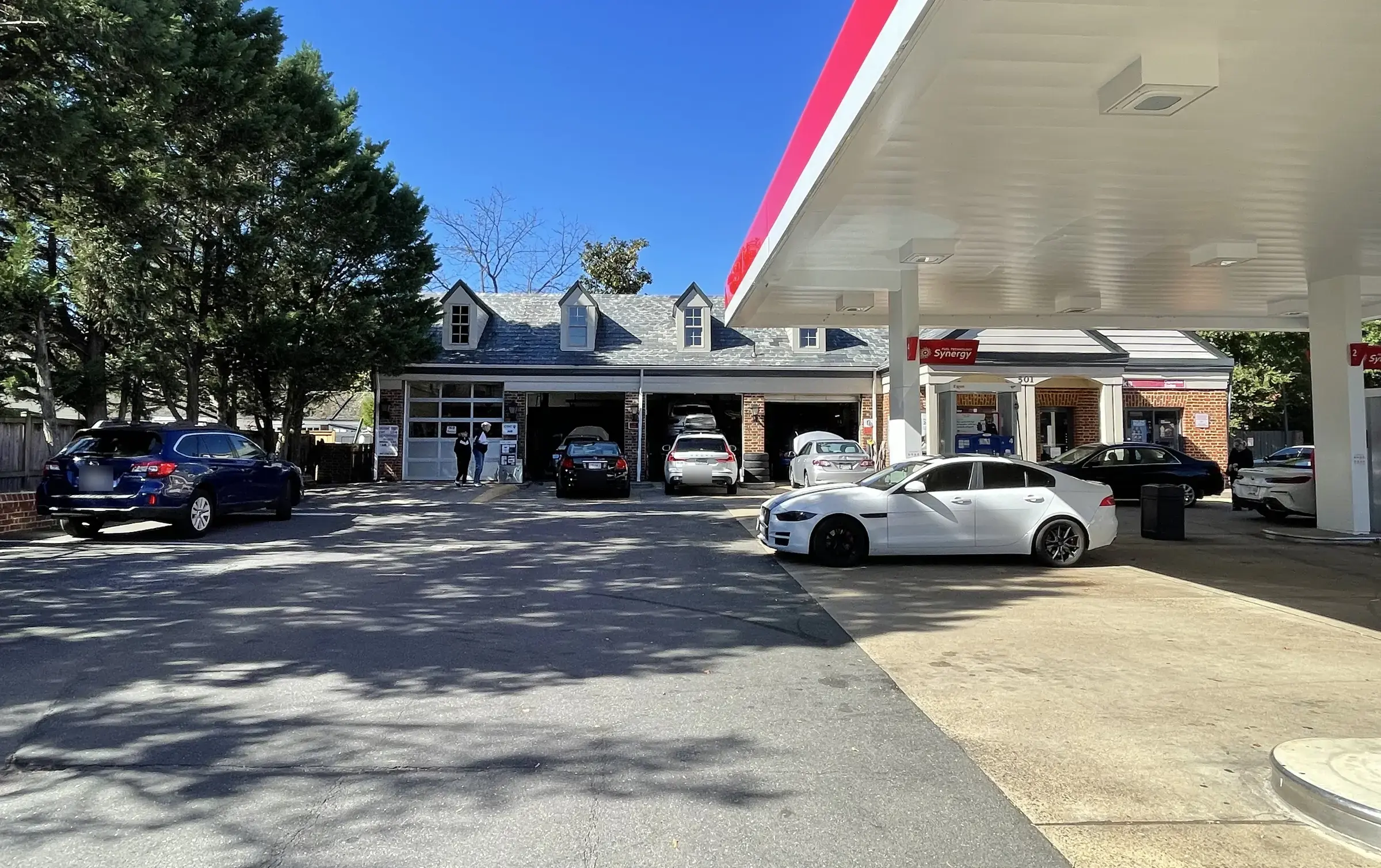
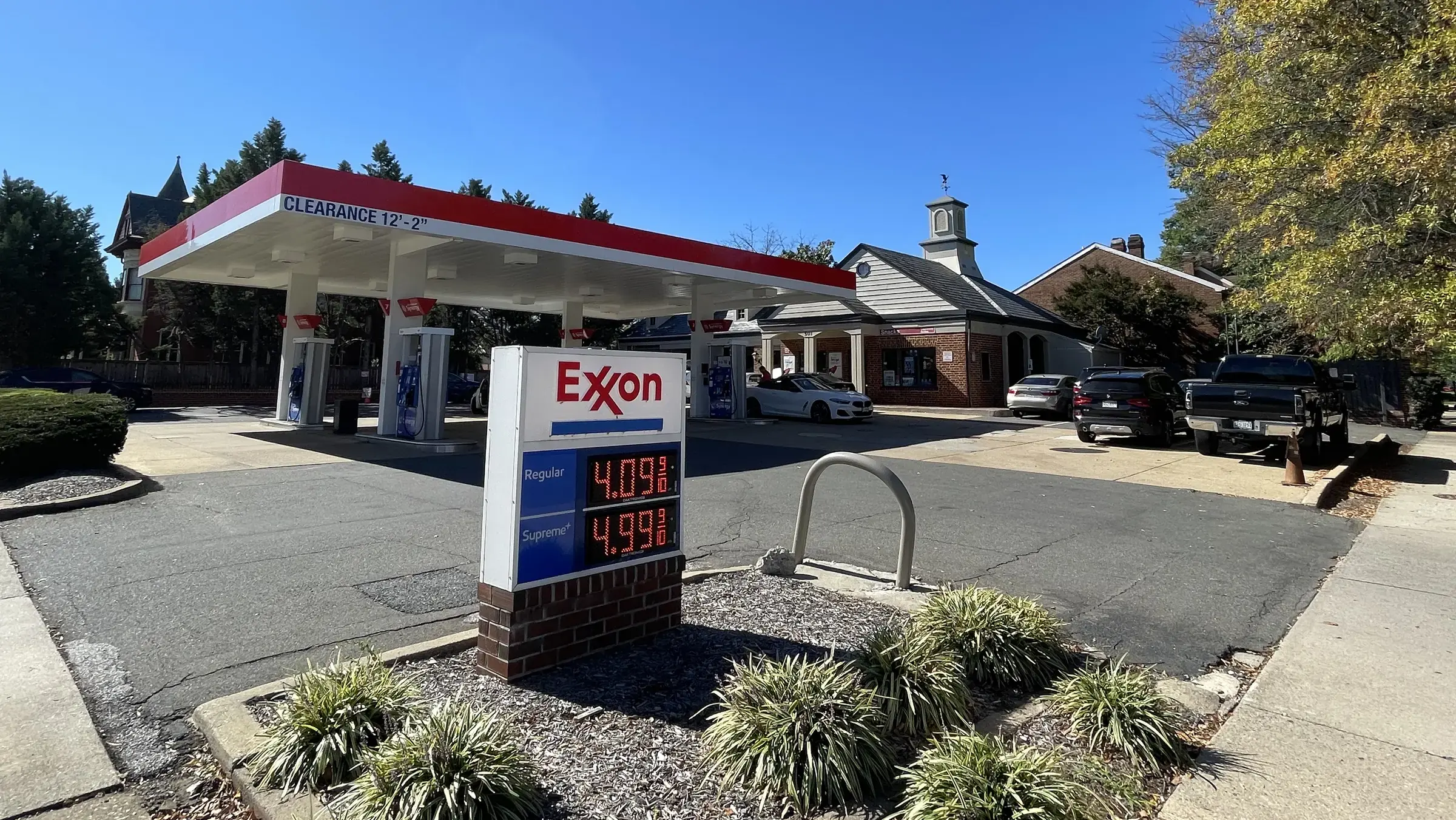
We're an official DEQ Air Check emissions station and we do Virginia safety inspections in the same lane, at 501 S. Washington St at Wilkes St, at the south end of Old Town. Pull in along the brick wall on the left side of the lot, starting at the "Inspection Lane Starts Here" sign. You can get both in one visit: about 10 to 15 minutes for the safety inspection and 7 to 12 for the emissions test, plus any wait in line.
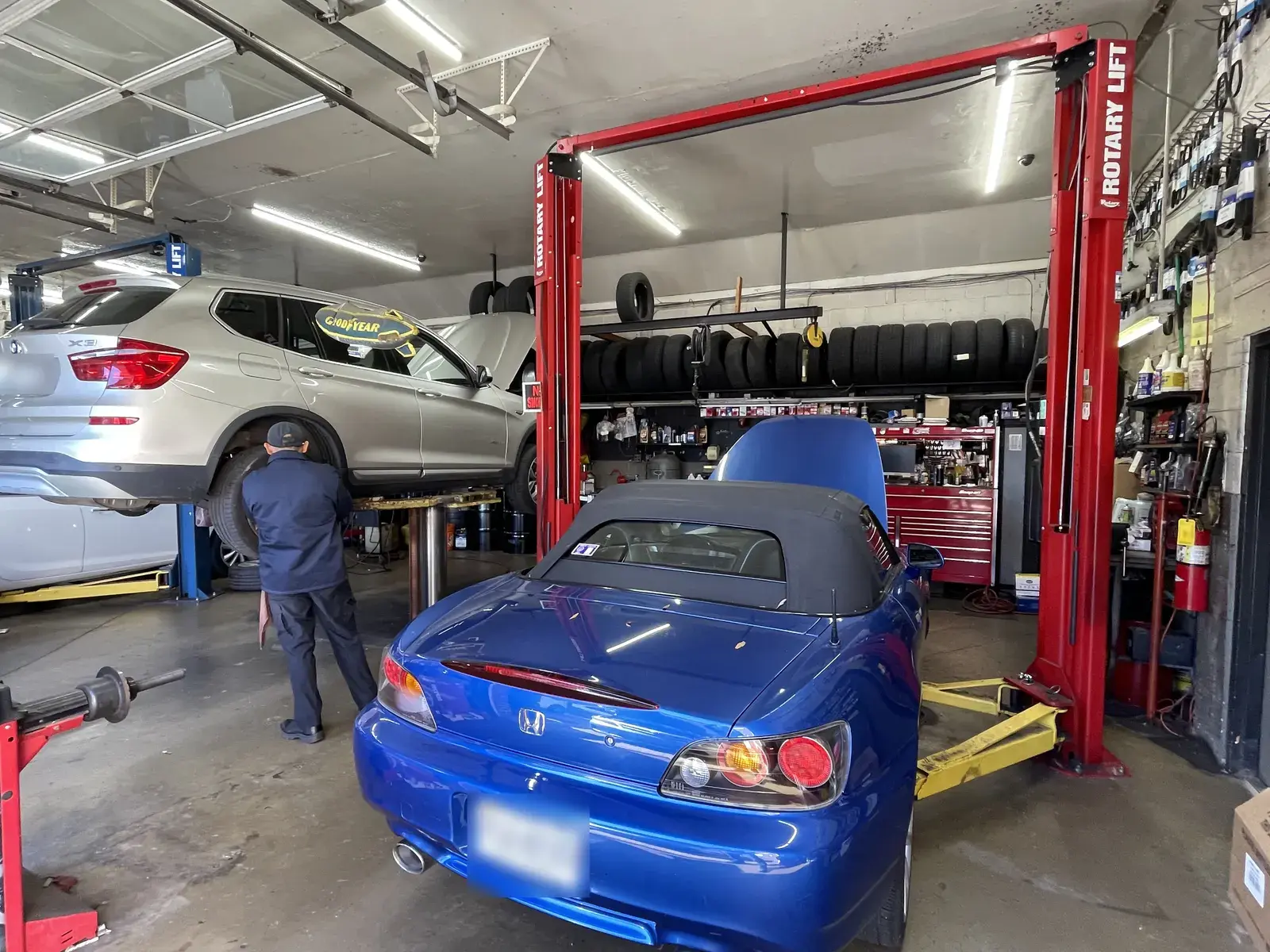
If the light is on, it usually makes sense to find out why the light is on before paying for an emissions inspection you already know it will fail. A code points to a system, not to a failed part. Our techs read the code, then check the freeze-frame and live data to find what actually failed. In plain terms, we read the stored codes and the freeze-frame snapshot of when the light came on, watch the live sensor data, test the part or circuit the code points to, and then explain what we found and what the fix involves before any repair starts. If your car comes up "not ready" for emissions, there's no charge, and we'll tell you which monitors still need to finish.
Inspections are walk-in, Monday–Friday 8 AM–5 PM and Saturday 8 AM–2 PM. For a check engine diagnosis, call (703) 549-6631 or book online.
Quick answers
Can a loose gas cap turn on the check engine light? Yes. EPA lists a loose or missing gas cap as something the system can detect (EPA). Tighten it and drive a few short trips. If the light stays on, get it checked. A missing cap also gets a car rejected from the emissions test (DEQ).
Will the tire pressure (TPMS) light fail the safety inspection? The 2026 manual doesn't list the tire pressure light as a rejection item. Tires are judged on tread depth and condition (manual).
Can I get my safety sticker while I'm still fixing the emissions problem? Yes. The safety sticker doesn't depend on the emissions result. Registration does: DMV won't renew it without an emissions pass or waiver (DMV). Testing up to 90 days before your registration expires still lets you renew for two years (DEQ).
Sources
- Virginia State Police, Motor Vehicle Safety Inspection Manual, approved March 17, 2026 (19VAC30-70-40, -80, -290, -300, -310, -350, -660)
- Virginia Administrative Code, 19VAC30-70-290 and 19VAC30-70-80
- Virginia Administrative Code, 9VAC5-91-420, emissions inspection procedure: rejection, pass, fail, waiver
- Virginia DEQ, How do I get an inspection? and Why did my vehicle fail?
- Virginia DMV, Emissions Inspections
- Code of Virginia, § 46.2-1182, emissions inspection fees
- U.S. EPA, OBD consumer brochure, EPA420-F-02-016 (2002, revised 2012, archived)
- U.S. EPA, Performing Onboard Diagnostic System Checks as Part of a Vehicle Inspection and Maintenance Program, EPA420-R-01-015 (June 2001)
- Honda, 2024 Civic Sedan owner's manual: If the Malfunction Indicator Lamp Comes On or Blinks
- Code of Virginia, § 46.2-1181, emissions repair waivers
Ibrahim, Service Department
Ibrahim has spent nearly 10 years in the automotive industry. At Old Town Exxon, Ibrahim works across the service department, from the bays to the back office.
Related Services
- Diagnostics & ElectricalCheck engine lights, electrical faults, starters and alternators.
- State InspectionsWalk-in Virginia safety inspections for the yearly sticker, at the south end of Old Town.
- Emissions InspectionsDEQ Air Check emissions testing for cars registered in Alexandria and Northern Virginia.
Need a Hand With Your Car?
Call or book online. We're at S. Washington & Wilkes St, 501 S Washington St, Alexandria, VA 22314.