Car Sat All Week and the Battery Died? What Low-Mileage Old Town Cars Need
If your car sat all week and the battery is dead, the usual cause is key-off drain: the clock, alarm and computers keep pulling power while it's parked, and a short weekend drive doesn't put it back. If it dies after just one week, the battery is likely weak or something is drawing too much. Test it before replacing it.
If you live in Old Town, you may know the pattern. You walk to King St-Old Town or Braddock Road, ride Metro all week, and the car sits on the street until Saturday. Here are the four things that wear differently on a car that sits: the battery, the oil, the brakes and the tires.
Why a car battery dies from sitting, and why short trips don't fix it
Your car is never fully off. Interstate Batteries calls this key-off or parasitic drain: the radio memory, the clock, the alarm and the computers all draw a little power around the clock. By their estimate, a car that just sits can drain its battery in about four weeks to two months. An older or weaker battery won't last that long.
The alternator recharges the battery while you drive, but Interstate says short trips to the store aren't enough to keep it healthy. Their advice is to drive the car once a week for at least 30 minutes at a time at highway speeds. If you have to park outside with the alarm on, Interstate says to make that 30-minute highway drive every few days. From the south end of Old Town, the GW Parkway, Route 1 and the Beltway over the Wilson Bridge are all close, so the hard part is making it a habit.
What a dead battery after one week usually means:
- The battery is getting old. Interstate says most batteries last three to five years and recommends a professional test once yours is three or older.
- Something is drawing more than it should. A light left on will do it. So can an alarm or a module that doesn't shut down.
- The charging system isn't keeping up. A test checks the battery and the alternator together, so you don't buy a battery you didn't need.
A trickle charger or battery maintainer is the classic fix for a car in storage, but it needs an outlet. If your car lives on the street, that's usually not practical, so the regular highway drive and a yearly test matter more.
Get it checked at our battery and charging test. It takes a couple of minutes.
One Virginia catch: the EPA's guidance for emissions programs (EPA420-R-01-015, June 2001) lists "resetting of the OBD system due to battery disconnection or replacement" as a reason a car shows up not ready. If your emissions test is due, a 2001 or newer car with two or more monitors still "not ready" gets rejected from testing (9VAC5-91-420, subdivision C 8 b). Our post on why cars come up "not ready" for emissions explains how to get them ready.
Oil change if you don't drive much: go by the calendar too
Many automakers don't time oil changes by miles alone. When you barely drive, the time limit is the one you'll hit first.
- Honda. The 2023 CR-V Maintenance Minder section says that if no oil-change message appears more than 12 months after the display is reset, change the engine oil every year.
- Ford. Its Intelligent Oil-Life Monitor works out the oil change interval from how you use the car, the operating conditions, and the time since the last oil service.
Short trips can also count against you. Lexus's 2010 GX 460 maintenance guide, for example, lists repeated trips of less than five miles in below-freezing weather as a special operating condition that calls for more frequent service. The guide says occasional trips like that don't change the schedule, so this applies if most of your driving is short trips in freezing weather. The same guide also tells low-mileage drivers to mark a calendar so they get maintenance every six months. That's Lexus's advice for that model, so check your own manual.
So the rule for a car that sits: find the time limit in your owner's manual and follow it, even if the odometer says you're nowhere near the mileage. If the oil-life monitor is counting down, trust it, and make sure whoever changes the oil resets it. Our own recommendation is an oil change every 5,000 miles. A car that sits can take a long time to get there, so it's due at 5,000 miles or at your manual's time limit, whichever comes first.
Bring your manual's schedule, or the oil-life reading, when you come in for an oil change.
Rust on the brake rotors when the car sits
Brembo explains that when a car is parked for a while, corrosion starts to form on the surface of the brake discs (rotors), and normal braking removes it. On the first drive after a long sit, Brembo says to test the brakes gently and expect some noise for the first few miles.
It gets worse the longer the car sits. Brembo says the rusty area can spread, which can cause noise and longer stopping distances. If the parking brake is left on, the pads can stick to the rotors, which Brembo calls brake stiction. Its advice is to move the car a short way forward and back once a week, gently using the brakes.
Get your brakes checked if the noise doesn't fade after the first few miles, the pedal pulses, the car pulls to one side, or a wheel feels like it's dragging.
Tires: slow air loss and flat spots
Tires leak a little all the time. NHTSA says they lose about 1 psi a month, and recommends checking them monthly.
A car that sits on the street makes this easy, because its tires are cold every morning. That's when NHTSA says to check them (not driven for at least three hours). Use the pressure on the label on the driver's door edge or post, not the number on the tire.
Flat spots are the other one. Michelin says a tire that sits can take a temporary flat spot, especially in cold weather, and it usually works itself out: driving at normal highway speeds for over 20 minutes relaxes most flat spotting. Michelin advises keeping tires at the door-label pressure and not over-inflating them. Continental adds that a tire left standing under load for a month or longer can develop a semi-permanent flat spot that normal driving won't fix.
If a vibration doesn't go away after a good drive, have the tires checked. For cold-weather pressure drops, see our winter prep post for street-parked cars.
Two more things if the car sits for months
Gas
This only matters if one tank lasts you a whole season. ExxonMobil's storage guidance says gasoline should generally be used within a month of purchase, and that gas kept in a sealed, approved storage can under its storage guidelines stays good for six to 12 months depending on the fuel type. That figure is for cans, not for gas sitting in a car's tank.
Mice and rats
GEICO notes that rodents are more likely to move into a car that stays put than one driven daily, and they chew wires and hoses. Common nest spots are between the battery and the frame, near the wiper motor, and under the air intake or air filter. If you find droppings, don't sweep or vacuum them. The CDC says to spray them with a bleach solution or an EPA-registered disinfectant until very wet, and let it soak for 5 minutes before wiping up.
A quick routine for a car that sits all week
| How often | What to do | Why |
|---|---|---|
| Weekly (every few days if parked outside with the alarm on) | Drive at least 30 minutes at a time at highway speeds | Recharges the battery and works off rotor rust and flat spots |
| Weekly | Listen on the first few stops | Rust noise should fade within the first few miles |
| Monthly | Check tire pressure before the first drive | Tires lose about 1 psi a month |
| By date | Change oil on your manual's time limit | Oil ages even when the miles don't add up |
| Yearly, once the battery is 3+ years old | Battery and charging test | Catches a weak battery before a dead Saturday |
When to bring it in
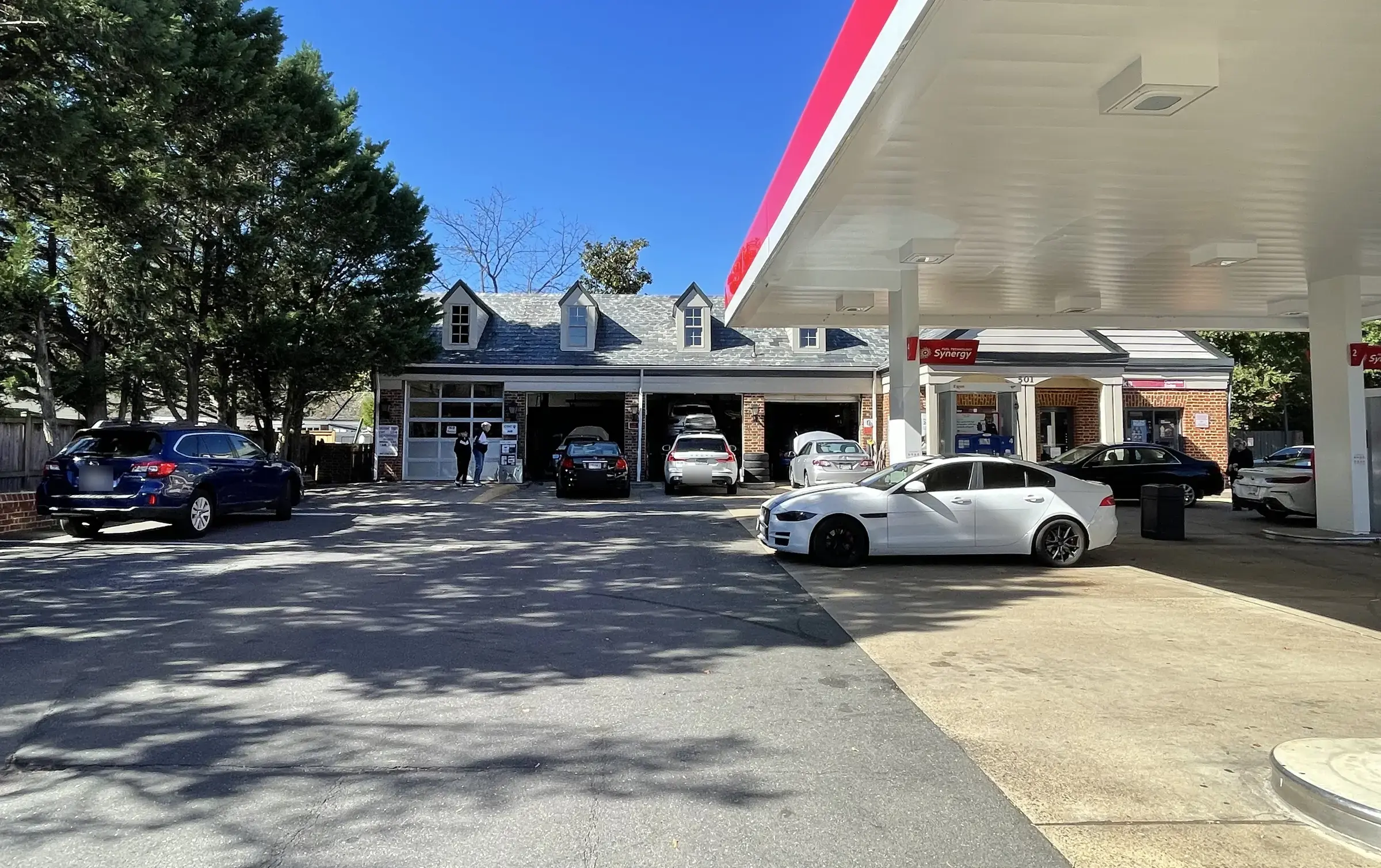
Bring it in if the car cranks slowly, the brake noise doesn't clear, a vibration sticks around, or you can't remember the last oil change. We're at 501 S. Washington St at Wilkes St, at the south end of Old Town, close to Route 1 and the Wilson Bridge if you want to take the long way home. Call (703) 549-6631 or book online.
Sources
- Interstate Batteries, How Long Can a Car Battery Sit Unused? (published April 15, 2020; revised October 8, 2026)
- Virginia Administrative Code, 9VAC5-91-420, Inspection procedure; rejection, pass, fail, waiver
- Honda, 2023 CR-V Maintenance Minder (owner's manual section, PDF)
- Ford, What is the Intelligent Oil-Life Monitor System in my Ford?
- Lexus, 2010 GX 460 maintenance guide supplement (PDF)
- U.S. EPA, Performing Onboard Diagnostic System Checks as Part of a Vehicle Inspection and Maintenance Program, EPA420-R-01-015 (June 2001)
- Brembo, How to avoid brake stiction
- NHTSA, Tires: In the Garage infographic (PDF) and TireWise tire safety page
- Michelin, Tire Flat Spotting
- Continental, Flat-spotting
- ExxonMobil, Gasoline safety and storage
- GEICO, How To Protect Your Car From Rodents (March 19, 2026)
- CDC, How to Clean Up After Rodents (April 8, 2024)
Ibrahim, Service Department
Ibrahim has spent nearly 10 years in the automotive industry. At Old Town Exxon, Ibrahim works across the service department, from the bays to the back office.
Related Services
- Oil ChangeFresh oil and a new filter, matched to your owner's manual, plus a free multi-point check.
- Brake RepairPads, rotors, calipers, brake lines and fluid, diagnosed before anything gets replaced.
- Tire ServiceFlat repair, new tires, rotation, balancing and tread checks for Old Town drivers.
- Battery ServiceQuick battery tests, new batteries and alternator and starter checks.
Need a Hand With Your Car?
Call or book online. We're at S. Washington & Wilkes St, 501 S Washington St, Alexandria, VA 22314.