How to Winterize a Car in Northern Virginia When It Lives on an Old Town Street
To winterize a car in Northern Virginia, you don't need a garage or a big service. You need four things done before the first hard freeze: get the battery tested, set the tire pressure on a cold morning, put in winter washer fluid and good wiper blades, and rinse the road brine off the underside after storms.
A car that lives on an Old Town street needs all four more than one in a garage. It sits out in the overnight cold. It gets sprayed with salt and brine whenever the trucks are out. And if a storm hits, it may get plowed in, because the City plows residential streets last.
Get the car battery tested before the cold sets in
Cold weather is hard on batteries from both sides. NHTSA puts it simply: when the temperature drops, so does battery power, and a gas engine needs more battery power to start in the cold. A battery that barely got you through October can leave you stuck on the first freezing morning.
What to do:
- Test it in November, not after it fails. A test checks the battery and the charging system, so you learn whether the battery is the problem or something feeding it. It takes a couple of minutes.
- Keep jumper cables in the trunk. They're on NHTSA's list of winter car supplies.
- If the car sits most of the week, that's a separate problem. We cover it in your car sat all week while you took Metro.
If you do replace it, know that a new or disconnected battery can reset the car's emissions self-checks. That matters if your emissions test is coming up; see why cars come up "not ready" for emissions.
Tire pressure in cold weather: why the light comes on in December
Air in a tire loses pressure as it cools. The U.S. Tire Manufacturers Association says inflation pressure goes down one to two pounds for every 10 degrees of temperature change, and Goodyear's tire inflation bulletin (December 15, 2015) gives the same range.
Here's what that looks like. Say you set a 35 psi tire on a 70-degree afternoon in October. On a 30-degree morning in December, that's a 40-degree drop, and the tire could read about 4 psi low. Nothing leaked. It just got cold.
How to set it right, from NHTSA's winter tips:
- Use the number on the driver's door frame (or in the owner's manual). The number on the tire sidewall is the maximum the tire can hold, not what your car needs.
- Check when the tires are cold, meaning they haven't been driven on for at least three hours. A car that sat on the street overnight is perfect. Goodyear's bulletin also counts a tire as cold if it's been driven less than a mile, so a short trip to an air pump is fine. We have one at the station.
- Look at the tread. NHTSA says it should be at least 2/32 of an inch on every tire. Check the spare too.
Don't wait for the dashboard light. Under the federal standard for tire pressure warning systems (49 CFR 571.138, S4.2), the light has to come on once a tire is 25 percent below the recommended cold pressure, or below a minimum set in the standard if that's higher. On a tire that should be at 35 psi, that's about 26 psi. By the time the light is on, the tire is already well low.
Do you need snow tires in Northern Virginia?
That depends on how much you have to drive when it snows. NHTSA says to consider them, and to compare tire quality grades (UTQGS) before you buy. If your car can stay home on snow days, start with the basics above: tread and pressure. Our tire service page covers both, plus flats.
Wipers, winter washer fluid and lights
You see less in winter, and road spray makes it worse. When a truck throws brine onto your windshield, the washer is the only thing that clears it. NHTSA says you can go through a lot of washer fluid in a single snowstorm. It recommends:
- Filling the reservoir with "winter" fluid that has de-icer in it, before the weather turns.
- Replacing worn wiper blades and making sure the defrosters work.
- Checking headlights, brake lights, turn signals and flashers. It gets dark early from November on.
We sell winter washer fluid and wiper blades at the station, and we'll put new blades on for you if you'd like a hand.
Road brine and salt: what goes on Alexandria's roads, and how to rinse it off
If you park on the street, you can't avoid road treatment. Here's what the agencies say they do:
| Road | Who treats it | What they say |
|---|---|---|
| City streets, including Old Town | City of Alexandria | Standard practice is to treat roads with brine on Fridays, especially bridges and overpasses, when temperatures are expected to be near or below freezing. During storms, streets get salt and are then plowed. The City says sand can't be used in parts of the City like Old Town, because it drains into the older sewers. |
| Interstates, such as the Capital Beltway (I-95/I-495) | VDOT | VDOT pretreats interstate, primary and high-volume secondary roads when the forecast supports it, but not neighborhood roads. |
The City clears 561 lane miles. It plows in order: primary roads, which include the snow emergency routes, then secondary routes, then intermediate streets, then residential streets. If you park on a side street, expect to wait.
The trouble with salt and brine is what stays on the car. Salty water gets into the wheel wells, onto brake lines and under the car. VDOT says it's a good idea to wash your vehicle if it comes into contact with these chemicals, to protect its finish.
What to do:
- Rinse the underside after a storm, once the roads are dry and it's above freezing. An underbody spray at a car wash works, or a hose on the wheel wells and behind the wheels.
- Clear the brine film off the windshield and lights when you rinse, not just the paint.
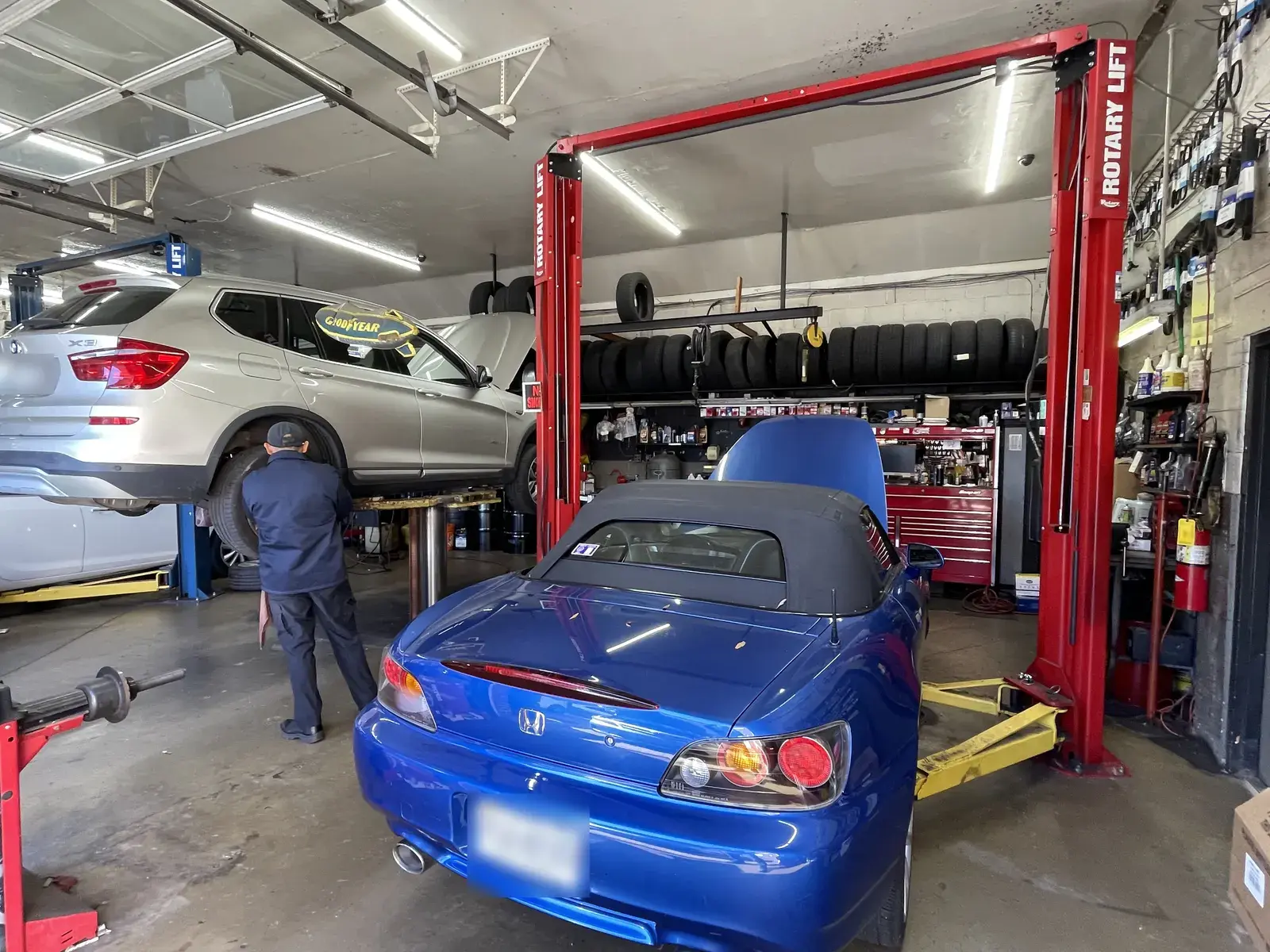
- Keep an eye out for rust on brake lines and underneath, especially on an older car, When your car is up on our lift for other work, like scheduled maintenance, our techs often check the brake lines and underside too. Rust on brake lines is easier to deal with when it's caught early.
Before a storm: where to park and what to keep in the car
Snow emergency routes are where you can't park once the City declares a snow emergency. The City's list includes Washington Street from one City limit to the other, U.S. Route 1, King Street from Union Street west, and Duke Street from Washington Street west. Washington, King and Duke all run through Old Town. The City says cars left on these routes after a snow emergency is declared may be towed at the owner's expense.
Even off those routes, the City asks people to move cars out of parking lanes before a storm when they can. It says this keeps the road open for plows, lowers the chance of damage to your car, and keeps it from getting snowed in. The City lists other places to park at alexandriava.gov/Parking.
How long you might wait: in a Level 1 storm (up to eight inches), the City says roads and sidewalks may not be fully clear for three days. So keep these in the car, all from NHTSA's winter supply list:
- A snow shovel, a broom and an ice scraper
- Sand or kitty litter for traction
- Jumper cables and a flashlight
- Blankets, water and a phone charger
If you run the engine to warm up while you dig out, clear the snow away from the tailpipe first. NHTSA warns that a blocked exhaust can cause carbon monoxide poisoning.
A November checklist
| Item | When | Why |
|---|---|---|
| Battery and charging test | Before the first hard freeze | Cold cuts battery power and makes starting harder |
| Tire pressure, set cold | Monthly, and after big temperature drops | Pressure falls 1-2 psi per 10 degrees |
| Tread depth, including the spare | Once before winter | At least 2/32 inch, per NHTSA |
| Winter washer fluid and wiper blades | Before the first storm | Brine spray empties the reservoir fast |
| Underbody rinse | After storms, once roads dry | VDOT advises washing road chemicals off |
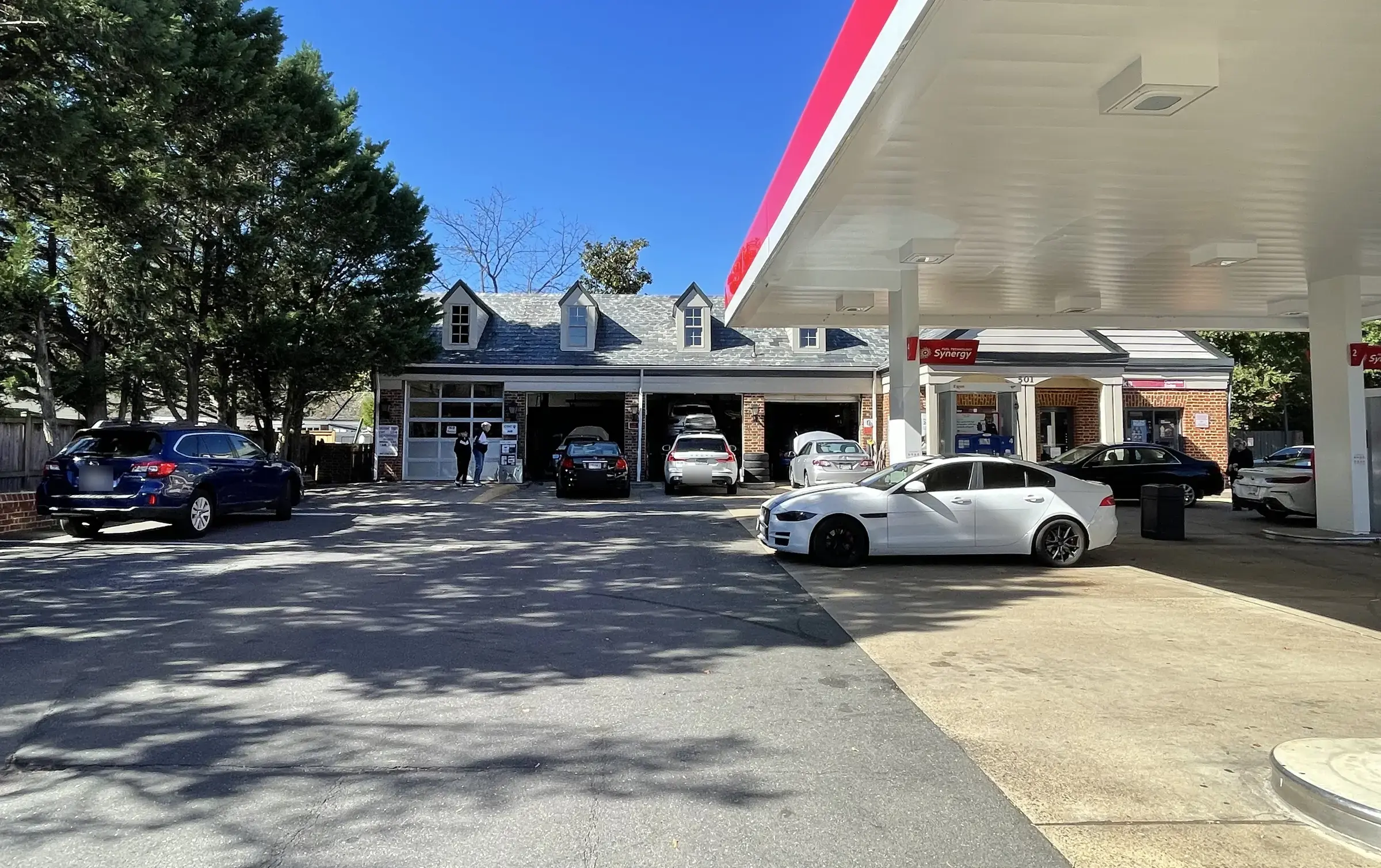
We're at 501 S. Washington St at Wilkes St, at the south end of Old Town, on one of those snow emergency routes. Call (703) 549-6631 or book online to have the battery tested and the tires checked before the cold sets in.
Sources
- City of Alexandria, Snow and Ice Control (page updated October 1, 2026)
- City of Alexandria, Parking
- Virginia Department of Transportation, Weather and road conditions FAQ (last updated July 10, 2026)
- National Highway Traffic Safety Administration, Winter Weather Driving Tips
- U.S. Tire Manufacturers Association, Tire Care Essentials
- Goodyear, Product Service Bulletin #2015-25: Tire Inflation Recommendations (December 15, 2015)
- 49 CFR 571.138, Standard No. 138: Tire pressure monitoring systems (eCFR, current as of October 21, 2026)
Ibrahim, Service Department
Ibrahim has spent nearly 10 years in the automotive industry. At Old Town Exxon, Ibrahim works across the service department, from the bays to the back office.
Related Services
Need a Hand With Your Car?
Call or book online. We're at S. Washington & Wilkes St, 501 S Washington St, Alexandria, VA 22314.